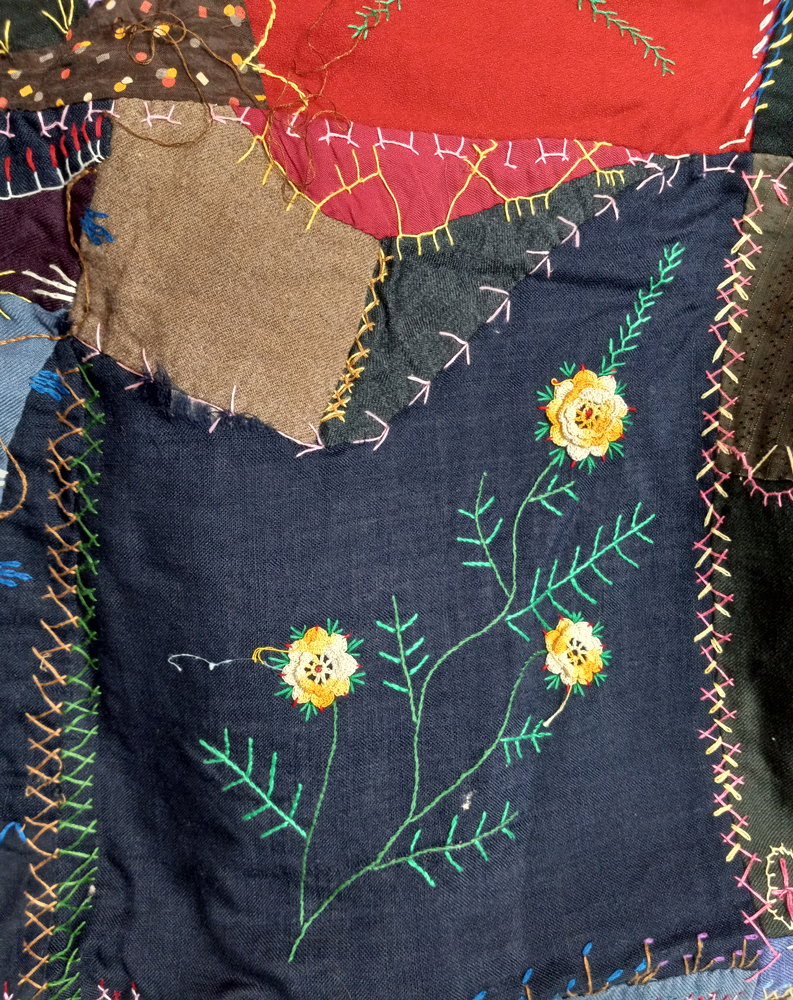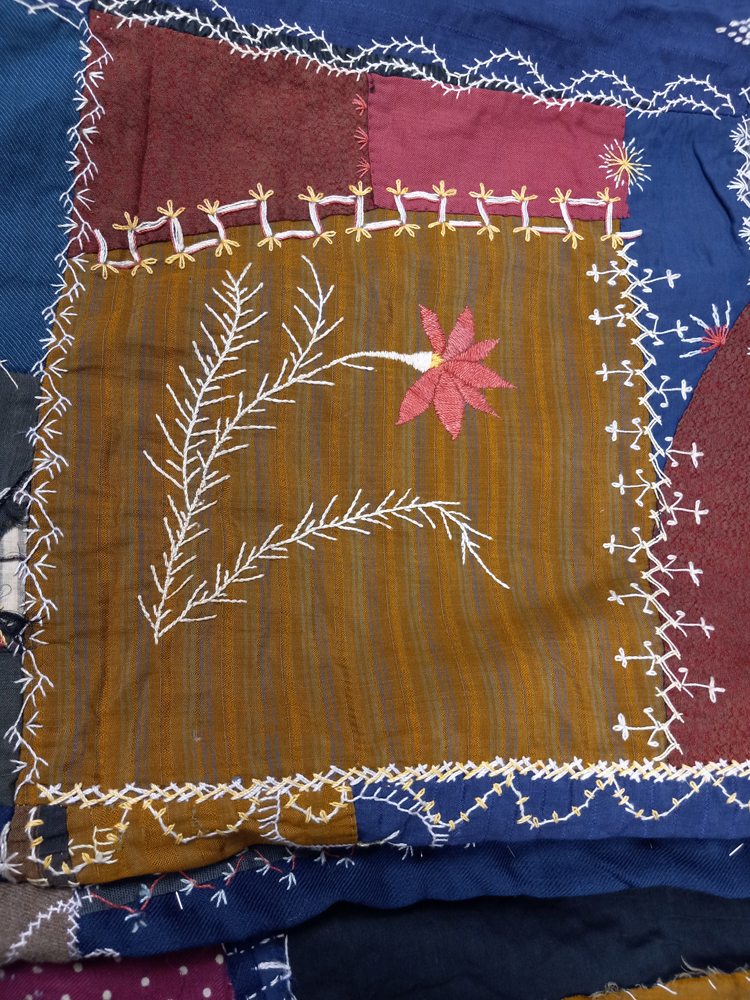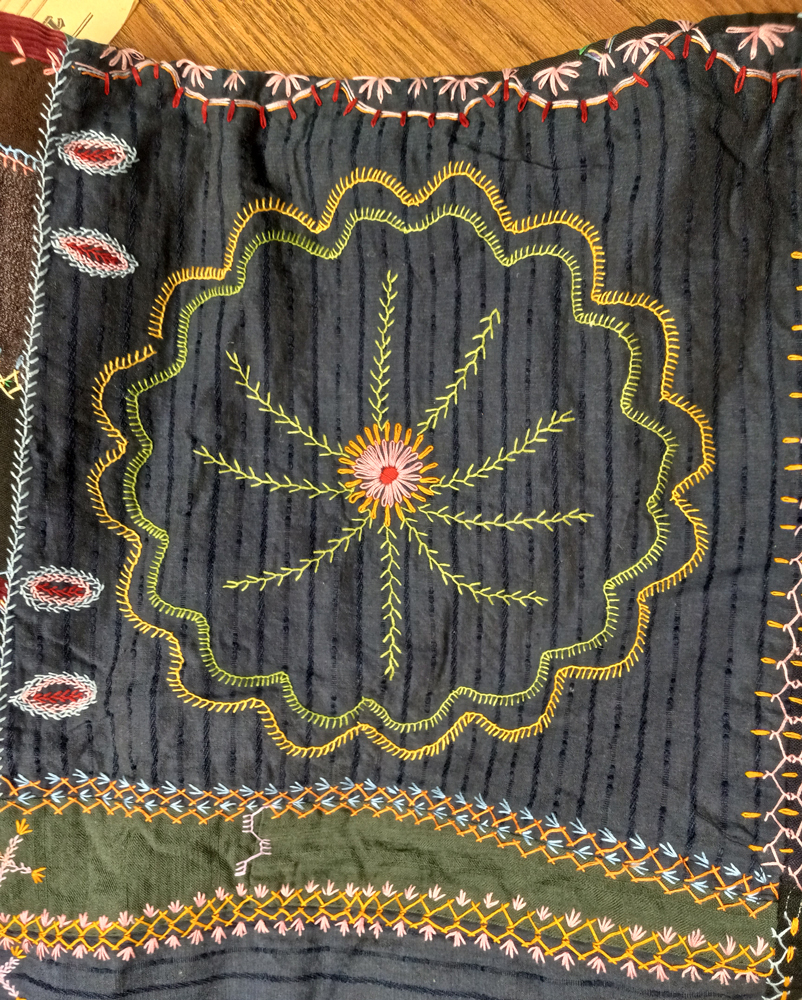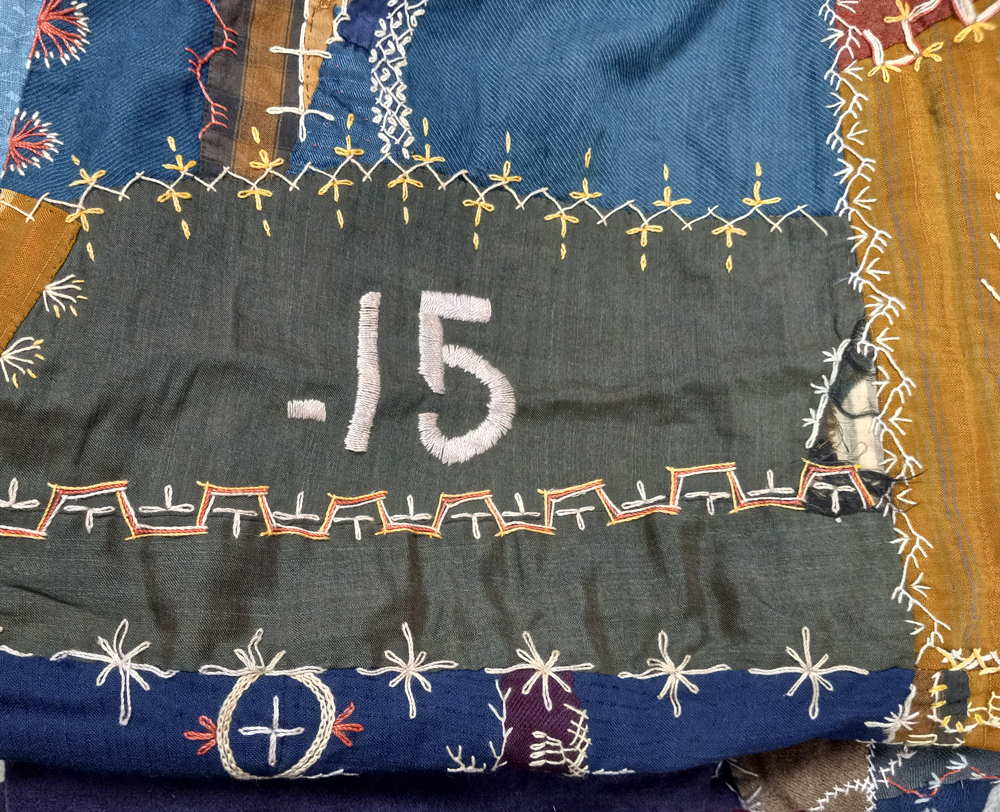
Another (beautiful) donation from Jane Brumbaugh:
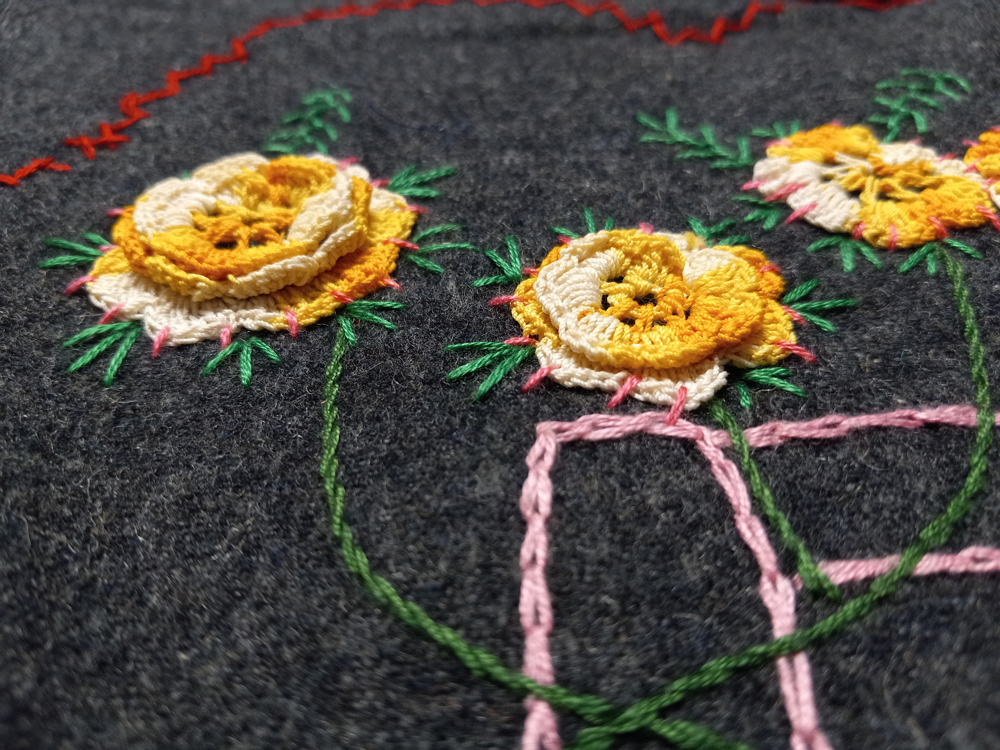
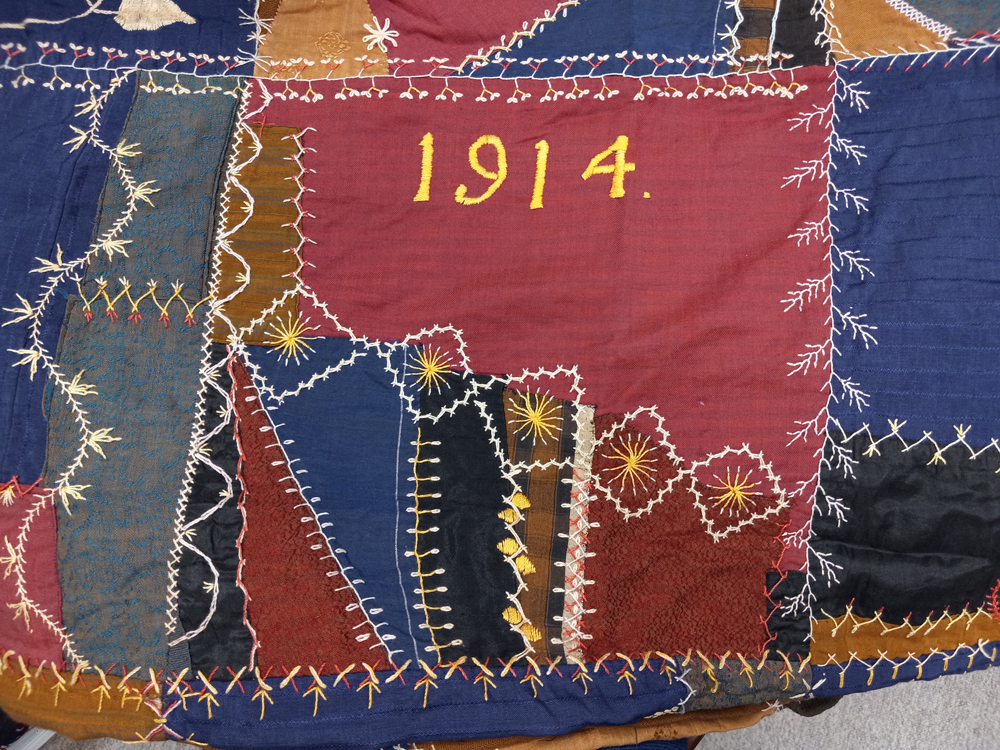
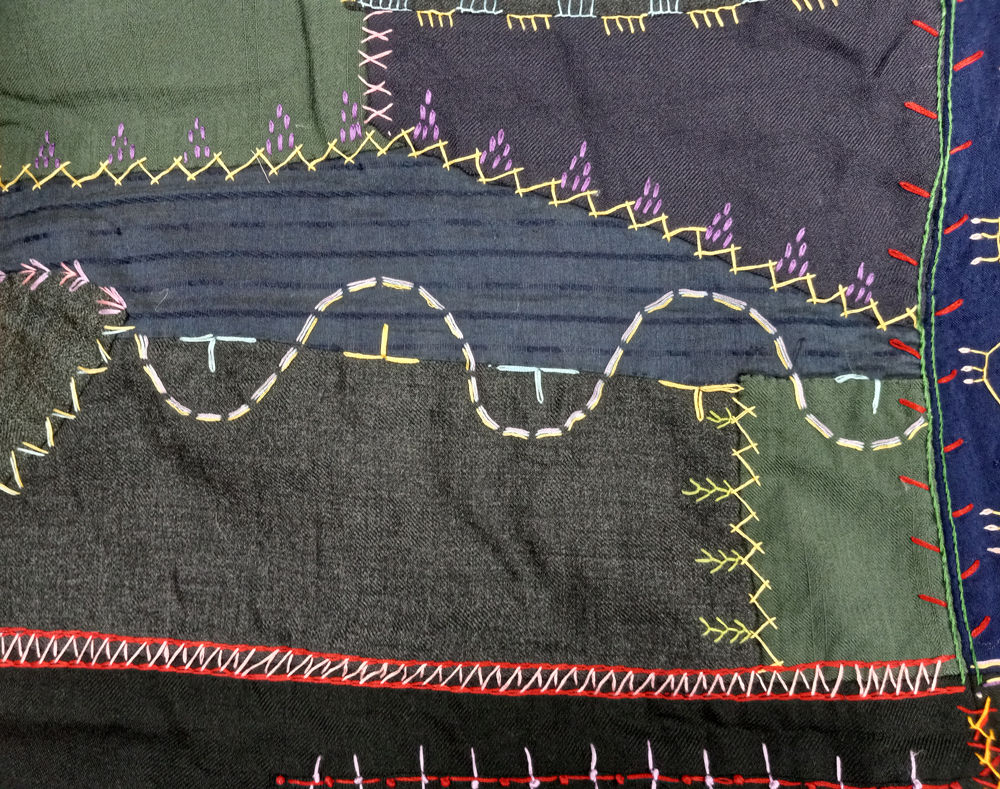
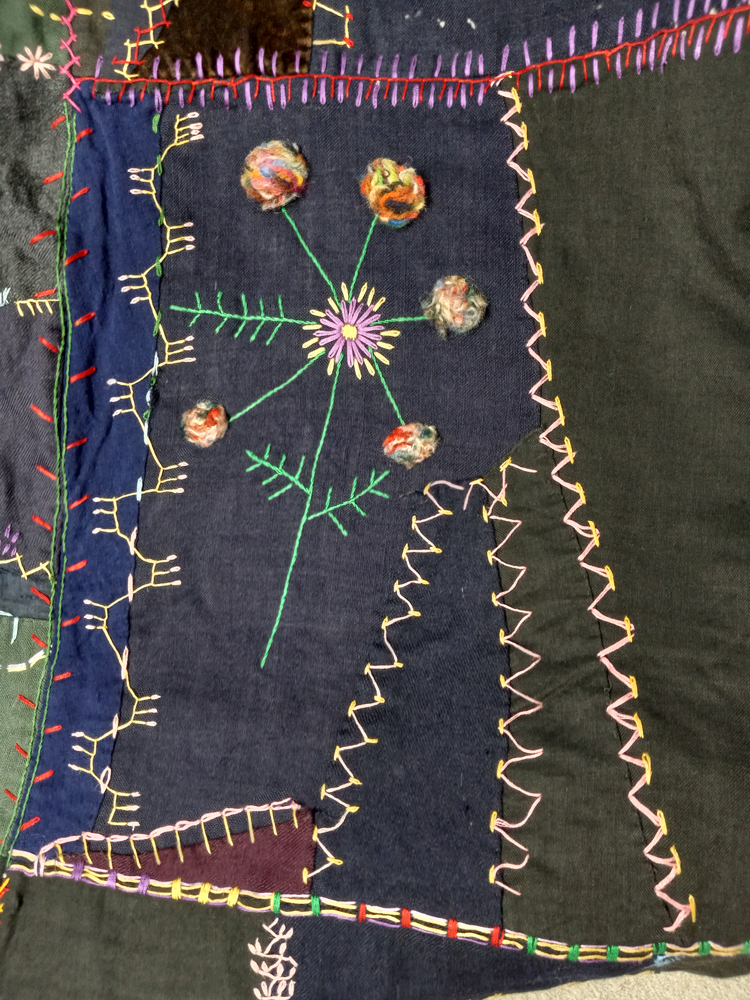
Here are some detail photos of a 1914 counterpane (or countypin, as my own Grandmother called them) made by Jane Brumbaugh’s Grandma McKnight who lived in the Hooker Community. It is pieced together like an unfinished quilt top, but it’s been hemmed all around. The creativity, colors and craftsmanship of the hand work are stunning in this 110-year-old example.
Nickolas and Fannie Fidella Edwards McKnight, are the great-grandparents of Jane (Irwin) Brumbaugh.
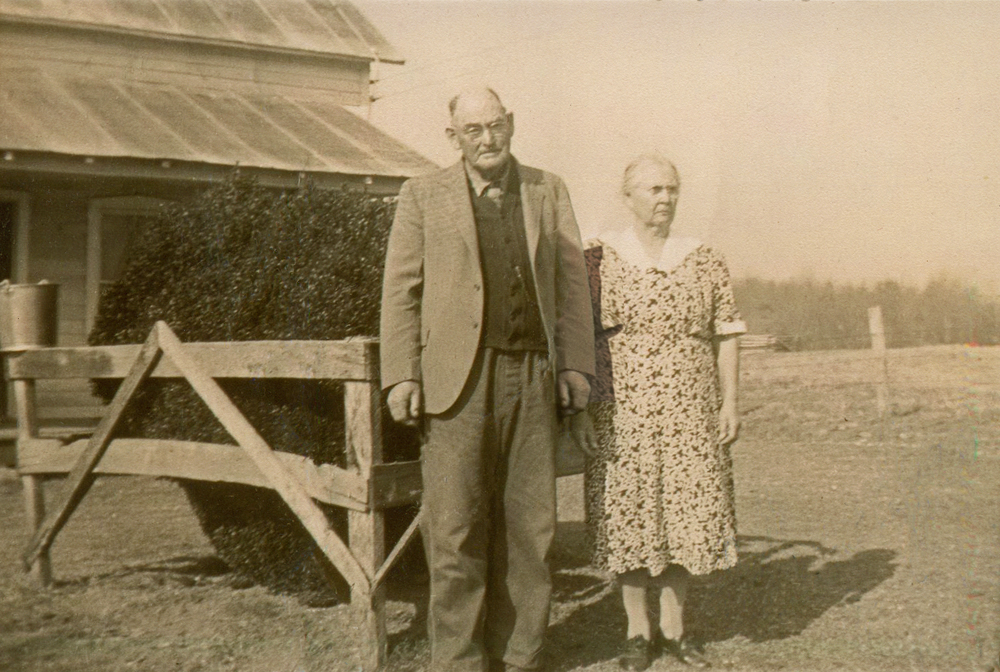
Fannie Fidella Edwards (1875–1968) married Nickolas McKnight (1872–1952) when she was just 18 and he 21 on the 11th of March, 1894, so that would make her 28-years-old when she created this spread.
Here is some information we found on bed covers:
A “coverlet” is the very top layer of bedding, which is designed to be a lighter weight than duvets and comforters, but not quite as long as an old-fashioned style bedspread.
A “counterpane” comes from the word, counterpoint, from the Old French word, contrepointe, based on medieval Latin culcitra puncta or ‘quilted mattress’ (puncta, literally meaning ‘pricked’, from the verb pungere). The ending, “pane” originally meant “piece of a garment,” from the Latin pannum, “piece of cloth.”
https://www.oxfordlearnersdictionaries.com/…/counterpane
https://www.vocabulary.com/dictionary/pane
A “feather tick” is simply a linen or cotton bag filled with feathers – or straw or wool or cotton – and sewn shut. The fabric, called ticking, needed to be closely-woven to avoid feathers leaking out. [but they still would and stick a person in the worst places- Auth.] Often ticking was waxed, or rubbed with soap, to make it impenetrable.
“Duvets”, known as federbetten or featherbeds in German, are loosely quilted. Broad channels stop the feathers ending up in one corner of the tick, while allowing them to expand and hold warm air.
http://www.oldandinteresting.com/history-feather-beds.aspx
One commenter said: “A comforter is a plush bedding top that is made with patterned fabric and is usually polyester filled. They are more affordable. A duvet is similar, yet it is plain, filled with down feathers and is meant to be put inside of a cover. The down filling makes them more expensive. The benefits to the increased price are that you get down filling which many find warmer and more comfortable. You also can change your bedding style with a new cover and still keep your original duvet. “